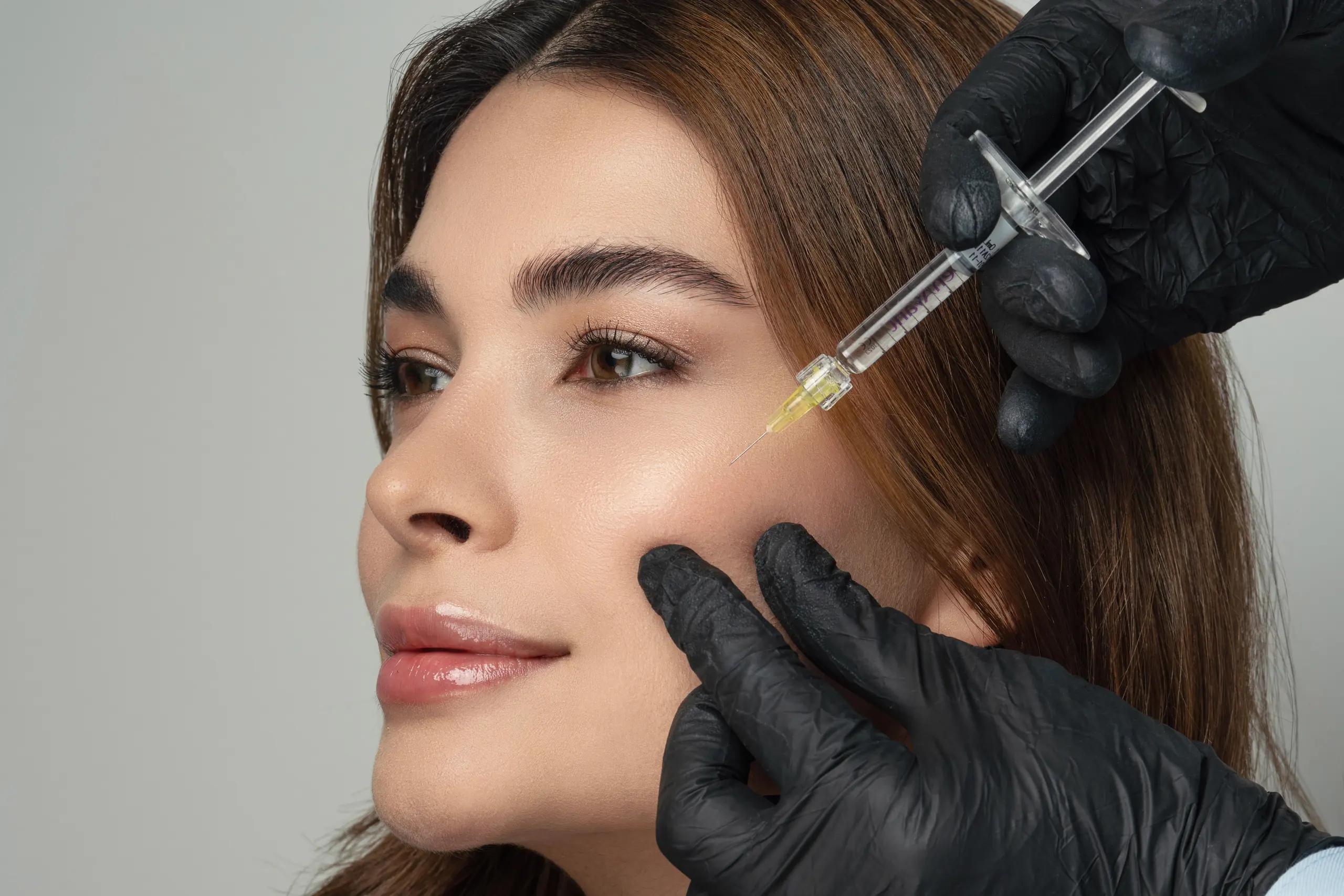
Nasolabial folds run from the sides of the nose to the corners of the mouth. Marionette lines start at the corners of the mouth and run down towards the chin. They are one of the most common reasons people come to us for a consultation, and most describe them the same way: “I look tired” or “I look sad”, even when they feel fine.
Both can be softened without surgery. Which treatment will help depends on why the lines have deepened. The obvious fix, filler injected straight into the crease, is often not the best one.
Two lines, two different causes
The nasolabial fold isn’t really a wrinkle. It’s the natural border between the cheek and the area around the mouth, and everyone has one, children included. What changes with age is how deep it looks, mostly because the midface loses volume and support.
Marionette lines come later. They sit below the corners of the mouth and have more to do with the lower face: volume loss there, tissue sliding down towards the jawline, and a muscle that pulls the corners of the mouth downwards.
Why they get deeper over time
There is rarely a single reason. Usually several things happen at once.
Facial fat isn’t one even layer. It sits in separate compartments, and Rohrich and Pessa (2007) showed that the nasolabial fold lies on the border between two of them. When the cheek compartment loses volume and drifts down, that border becomes more visible.
The ligaments that anchor soft tissue to the bone also loosen. The tissue around them descends, and creases form where it is still held in place. A 2024 review of marionette lines points to the mandibular ligament and to tissue sagging towards the jaw, the area usually called jowls.
Bone changes too. According to Mendelson and Wong (2012), the upper jaw beside the nose and the front of the lower jaw gradually lose bone, so the soft tissue on top has less to rest on.
And the skin itself gets thinner, with less collagen and elasticity. Sun, smoking and rapid weight loss all speed this up. We wrote about the weight-loss side in our article on “Ozempic face”.
Why we don’t just fill the fold
The instinct is to put filler right into the line. But if the fold has deepened because the cheek has lost support, filling the crease treats the shadow, not the cause. Too much product there makes the face look heavy, and a bulge often appears beside the mouth when you smile. The specialists quoted by RealSelf warn about the same thing with overfilled marionette lines.
So we look at the whole face first. If the cheeks have lost volume, we restore support there with a small amount of precisely placed product, and only then decide whether the fold itself needs a fine touch-up.
The studies behind this approach are small, but encouraging. In a group of 18 patients, nasolabial folds were up to 30.4% shallower three months after hyaluronic acid filler placed in the cheeks only. In another study of midface filler, 14 of 17 participants had a clinically meaningful improvement in their folds at six months.
One caveat, because it is often oversold: cheek filler doesn’t pull the fold up like a thread. A 3D study by Mowlds and Lambros (2018) found that the product expands the tissue around the injection point rather than lifting the fold. The improvement comes from better proportions and careful placement, which is why there is no standard recipe.
What we use, and when
It depends on what is driving the problem: lost volume, loose skin, poorer skin quality, or a mix of all three. Most people do best with a combination of treatments, spread out over time.
Hyaluronic acid filler
Filler restores volume and support in the midface and lets us make small corrections around the folds, lips and chin. It usually lasts 12–24 months, depending on the area and the product. Hyaluronic acid has one big advantage: if needed, it can be dissolved with an enzyme called hyaluronidase. More on our Fillers and facial contouring page.
Sculptra and other collagen stimulators
Sculptra, Radiesse, Juvelook and HArmonyCa don’t add volume on the day. They prompt the skin to build its own collagen, so the change is gradual and looks natural. Sculptra Aesthetic was approved by the FDA in 2009 specifically for shallow to deep nasolabial folds.
Results start to show after 4–8 weeks and keep improving for up to six months. Most people need 2–5 sessions, 4–6 weeks apart. See Collagen stimulators.
Morpheus8 Burst
Morpheus8 Burst combines microneedling with radiofrequency energy to stimulate collagen in the deeper layers of the skin, making it firmer and denser, including in the lower face. It doesn’t replace volume the way filler does. It improves the skin that lies over the folds.
A 2026 systematic review of 20 studies on radiofrequency microneedling reported improvement in wrinkles and skin laxity, with side effects that were mostly mild, short-lived redness and swelling. More on the Morpheus8 Burst by InMode page.
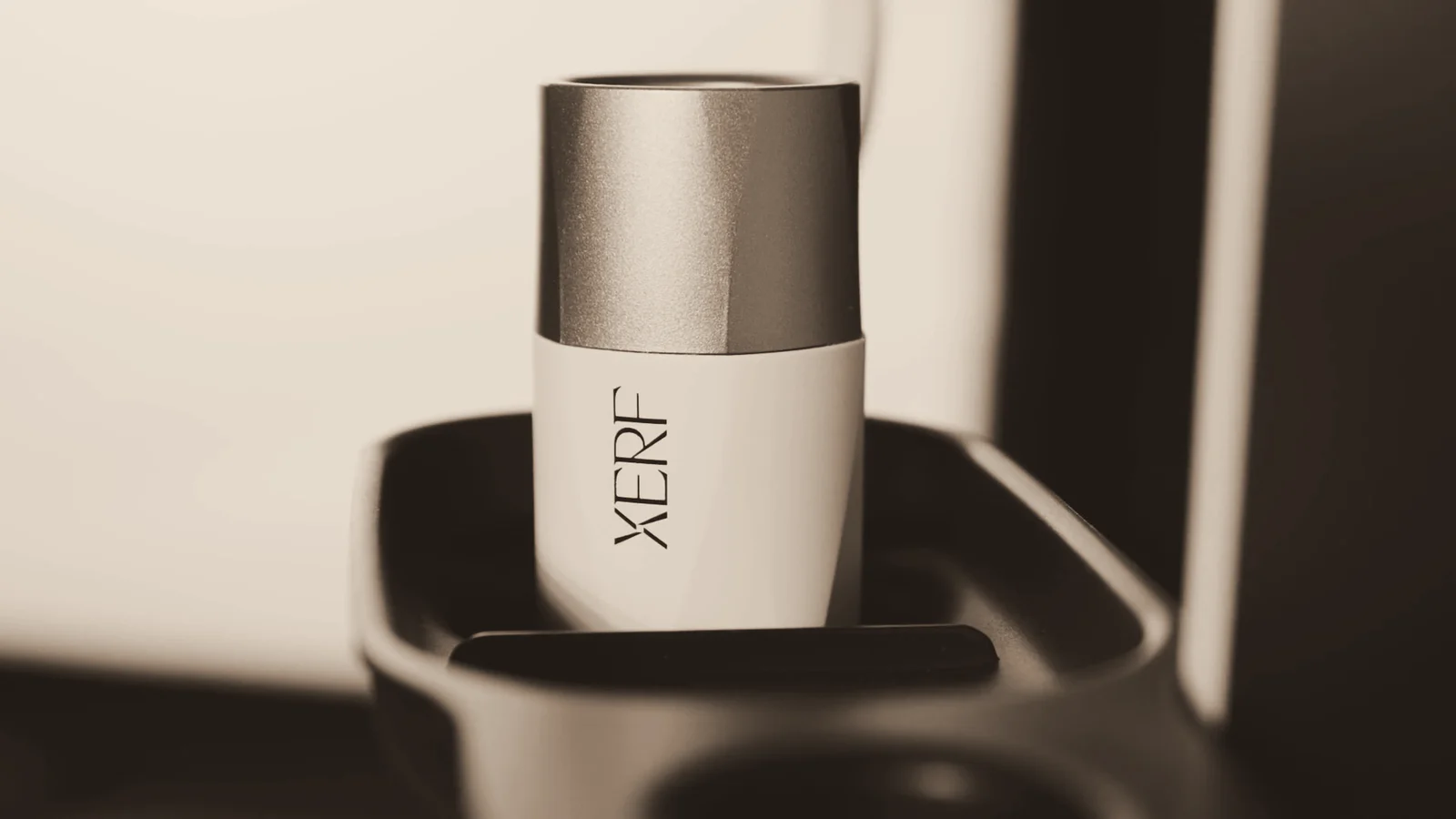
XERF
For mild to moderate laxity along the jawline and in the lower face, XERF may also help. It is a radiofrequency treatment with no needles and no downtime, and it is arriving at Dermique very soon. We explain how it works in XERF: the needle-free skin tightening everyone is talking about.
Botulinum toxin for marionette lines
In some people the muscle that pulls the corners of the mouth down is very active and deepens the marionette lines. A small dose of botulinum toxin can relax that pull and complement the filler. Whether it suits you is something we decide at the consultation.
When non-surgical treatment isn’t enough
There are limits. A simple check: if the fold only disappears when you gently pull your skin back towards your ears, the issue is probably loose, excess tissue rather than missing volume. More filler won’t give a natural result in that case. We will tell you so honestly and talk through what is realistic, including seeing a plastic surgeon.
What a visit looks like
We start by looking at your face at rest and while you talk and smile, at your skin quality, and at what you would like to change. Only then do we suggest a plan.
Before filler we apply a numbing cream, and most fillers also contain lidocaine, so the treatment is usually well tolerated. Some redness or swelling for 24–48 hours afterwards is normal.
Filler shows straight away. Collagen stimulators, Morpheus8 Burst and XERF work gradually over the following weeks and months. Ageing doesn’t stop, so results are maintained with occasional top-up treatments that we plan together.
Safety: who injects, and how
Serious complications are rare, but this area has a rich blood supply. The facial artery and its branches run close to the nasolabial fold and the marionette area, and their exact course differs from person to person, as an anatomical review of the facial artery shows. The FDA notes that accidental injection of filler into a blood vessel is rare but can have serious consequences, including damage to the skin and eyesight, and recommends that only a qualified professional performs the procedure.
At Dermique, injectable treatments are performed by a doctor who knows facial anatomy and chooses the product, amount and technique. We keep hyaluronidase at the clinic. Dissolving the filler with it is the core of the recommended protocol for a vascular complication.
If after treatment you notice severe or worsening pain, skin that turns pale or blotchy blue, or any change in your vision, contact us immediately.
We don’t treat when there is an active skin infection in the area, or during pregnancy and breastfeeding, and some autoimmune conditions need a closer look first. That is why we ask about your health in detail before any procedure.
Book a consultation at Dermique
If you recognise yourself in this article, the best first step is an examination by a dermatologist. Fill in our enquiry form and our team will contact you to confirm a convenient time. You can also reach us via our Contact page. Current prices are on our price list.
This article is for information only and does not replace a medical examination. The choice of treatment and expected results are individual and are decided after a consultation.