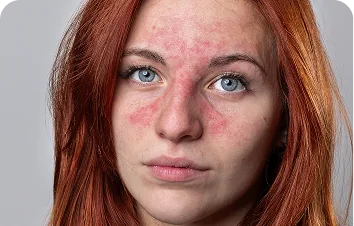
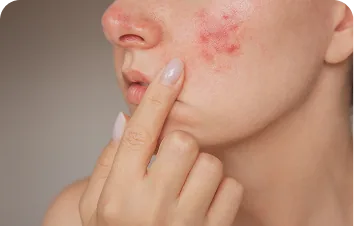
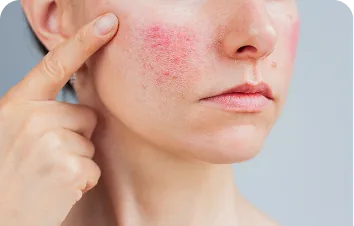
Rosacea is a chronic inflammatory skin condition that most commonly affects the face. It can cause persistent redness, sensitivity, burning, visible capillaries, and sometimes acne-like bumps. The goal of treatment is to reduce inflammation, calm the skin, minimize redness, and create a long-term plan to keep the condition under control.

See more…
Rosacea is more than simply “sensitive skin” or occasional facial redness. It is a chronic condition in which the skin overreacts to internal and external factors. Blood vessels become more reactive, the skin barrier is often compromised, and inflammation may flare periodically.
The exact causes of rosacea are not fully understood, but genetic predisposition, vascular hyperreactivity, altered immune response, microorganisms such as Demodex folliculorum, and UV exposure may all play a role. Common triggers include sun exposure, heat, sudden temperature changes, saunas, alcohol, spicy foods, hot beverages, stress, intense exercise, and unsuitable skincare products.
Phymatous rosacea
Phymatous rosacea is a less common form associated with thickening of the skin, most often affecting the nose, where it is known as rhinophyma. It requires a specialized medical approach.
Phymatous rosacea
Phymatous rosacea is a less common form associated with thickening of the skin, most often affecting the nose, where it is known as rhinophyma. It requires a specialized medical approach.
Papulopustular rosacea
Papulopustular rosacea can resemble acne, with red bumps and pustules. Because the two conditions require different treatment approaches, an accurate differential diagnosis and a targeted treatment protocol are essential.
Papulopustular rosacea
Papulopustular rosacea can resemble acne, with red bumps and pustules. Because the two conditions require different treatment approaches, an accurate differential diagnosis and a targeted treatment protocol are essential.
Erythematotelangiectatic rosacea
This type of rosacea causes persistent facial redness and visible capillaries. Treatment focuses on reducing the vascular component while calming and strengthening the skin.
Erythematotelangiectatic rosacea
This type of rosacea causes persistent facial redness and visible capillaries. Treatment focuses on reducing the vascular component while calming and strengthening the skin.
Phymatous rosacea
Phymatous rosacea is a less common form associated with thickening of the skin, most often affecting the nose, where it is known as rhinophyma. It requires a specialized medical approach.
Papulopustular rosacea
Papulopustular rosacea can resemble acne, with red bumps and pustules. Because the two conditions require different treatment approaches, an accurate differential diagnosis and a targeted treatment protocol are essential.
Erythematotelangiectatic rosacea
This type of rosacea causes persistent facial redness and visible capillaries. Treatment focuses on reducing the vascular component while calming and strengthening the skin.
Successful rosacea treatment requires a comprehensive approach that combines identifying individual triggers, medical treatment, and specialized in-office procedures. At Dermique, we create a personalized long-term management plan focused on reducing redness, calming the skin, and improving quality of life.
Your treatment plan may include:
We use cookies and similar technologies to keep the website working properly and to give you a better experience. You can accept all, decline the optional ones or manage your preferences.
Atrophic scars
Atrophic scars are indented scars that most commonly appear following acne or other inflammatory conditions. They are caused by a loss of collagen and uneven skin regeneration.
Appropriate treatment methods
At Dermique, we don’t treat acne scars using just one technique. Where necessary, we combine:

Limited spots available
up to −20% off
Be among the first to experience XERF at Dermique. Secure exclusive pre-launch pricing and save up to €760.
Explore the offer →