XERF is coming to Dermique! Get early access with exclusive savings of up to 20%. Limited spots available. See the offer →

Skin lesions

Skin lesions are common changes or growths that can develop on the skin. Some are completely benign, while others require closer evaluation and monitoring. They can appear on the face, neck, body, scalp, or intimate areas and may cause aesthetic concerns, irritation, discomfort, or uncertainty about whether they require medical attention.

See more…

Types of skin lesions we treat

Warts and viral skin lesions

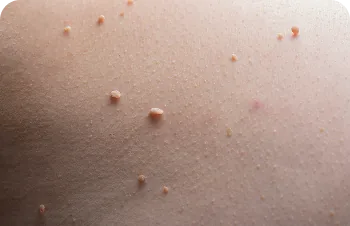
Warts are viral skin growths that can spread, become irritated or injured, and cause discomfort, particularly when they develop on the hands, soles of the feet, or genital area. Treatment depends on the number of warts, their location, how long they have been present, and their depth.

For some warts, topical treatment or cryotherapy may be sufficient, while others may require a combination of treatments and follow-up care.

Warts and viral skin lesions

Warts and viral lesions – small growths on the skin

Warts are viral skin growths that can spread, become irritated or injured, and cause discomfort, particularly when they develop on the hands, soles of the feet, or genital area. Treatment depends on the number of warts, their location, how long they have been present, and their depth.

For some warts, topical treatment or cryotherapy may be sufficient, while others may require a combination of treatments and follow-up care.

Malignant skin lesions

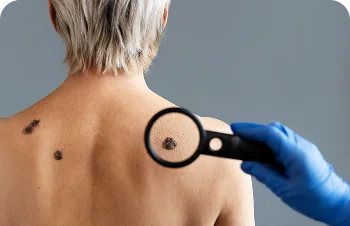
Any skin lesion that grows, changes in color or shape, bleeds, crusts, becomes painful or itchy, or simply looks different from other lesions should be evaluated by a dermatologist.

Malignant skin lesions

Suspicious or malignant skin lesions – mole on the back examined with a magnifier

Any skin lesion that grows, changes in color or shape, bleeds, crusts, becomes painful or itchy, or simply looks different from other lesions should be evaluated by a dermatologist.

Benign skin lesions

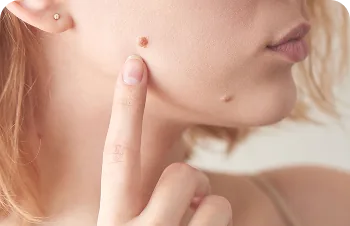
Skin tags, seborrheic keratoses, epidermoid cysts, warts, milia, lipomas, and other benign skin growths are among the most common reasons patients see a dermatologist. Although they are generally harmless, they may become irritated or inflamed, bleed, interfere with shaving, or cause aesthetic concerns.

Benign skin lesions

Benign skin lesions – woman pointing to a small mole on her chin

Skin tags, seborrheic keratoses, epidermoid cysts, warts, milia, lipomas, and other benign skin growths are among the most common reasons patients see a dermatologist. Although they are generally harmless, they may become irritated or inflamed, bleed, interfere with shaving, or cause aesthetic concerns.

Types of skin lesions we treat
Skin lesion removal methods

The appropriate removal method is determined after a consultation and evaluation by a dermatologist. Different types of skin lesions require different approaches.

Depending on the individual case, we may use:

  • surgical excision — for deeper lesions or those that need to be sent for histopathologic examination
  • laser removal — for suitable benign superficial lesions when precision and an optimal aesthetic result are the priority
  • cryotherapy — for certain types of warts and superficial benign lesions
  • curettage — a technique in which a superficial skin lesion is carefully removed using a specialized instrument called a curette; suitable for certain benign lesions
  • dermoscopy and monitoring — when a lesion does not require removal but should be monitored over time
Start with a comprehensive skin evaluation and a personalized treatment plan from Dermique’s medical team.
Frequently asked questions
Why is early diagnosis important?
Early detection of malignant skin lesions is critical for successful treatment.
Any lesion that changes in size, color, or shape, bleeds, or causes discomfort should be evaluated by a dermatologist. Do not try to determine whether a lesion is benign or malignant on your own.
The procedure is performed under local anesthesia and is painless. Recovery time depends on the removal method and the size of the lesion.
Whenever there is suspicion of malignancy, the removed tissue is sent for histopathologic examination. The results determine whether any additional treatment is necessary.

Atrophic scars

Atrophic scars are indented scars that most commonly appear following acne or other inflammatory conditions. They are caused by a loss of collagen and uneven skin regeneration.

Appropriate treatment methods

At Dermique, we don’t treat acne scars using just one technique. Where necessary, we combine: