Most people think about laser hair removal in May, when beach season is coming. UK laser clinics, though, repeat the same advice every autumn, and it has medical logic behind it: the best time to start is now, in autumn. Here is why, and what you should know before booking your first session.
Why laser hair removal takes several months
The laser “finds” the hair through its pigment and directs energy into the hair follicle. This works best when the hair is in its active growth phase. At any given moment, though, only some hairs are in that phase. The rest are resting and will “surface” later.
That is why one session is not enough. With Clarity II we usually recommend 6–8 sessions, and the interval depends on the area:
- face, underarms, bikini, neck and beard line: every 4–6 weeks;
- arms, legs, back, chest, abdomen and buttocks: every 6–8 weeks.
Simple maths shows that a course of 6–8 sessions spaced 4–8 weeks apart takes roughly six months to a year. Start in October or November, and by summer you will be at the end of your course, not the beginning.
4 reasons autumn is the ideal time
1. Your skin has no active tan
The laser targets pigment. Strongly tanned skin also contains more pigment, which raises the risk of irritation and pigment changes. That is why treatment is not recommended on skin with an active tan or after recent sun or sunbed exposure. In autumn the summer tan fades and the skin is in its most suitable condition.
2. Aftercare is easier
After laser hair removal the skin is temporarily more sensitive. Avoid saunas and intense heat for the first few days, and sun and sunbeds for 7–10 days after treatment. That is much easier in October than in July.
3. You don’t have to “show” your skin
Before treatment the area must be cleanly shaved. Waxing, epilators, tweezers and plucking, however, are off-limits for at least 4 weeks before a session, because they remove the hair from the root, and the laser needs the follicle. In summer this is hard for many people. Under autumn clothes it is much easier.
4. You beat the spring rush
Every spring, demand for laser hair removal appointments rises sharply. Starting in autumn lets you keep to the right intervals between sessions, which matters for a good result.
Why Clarity II
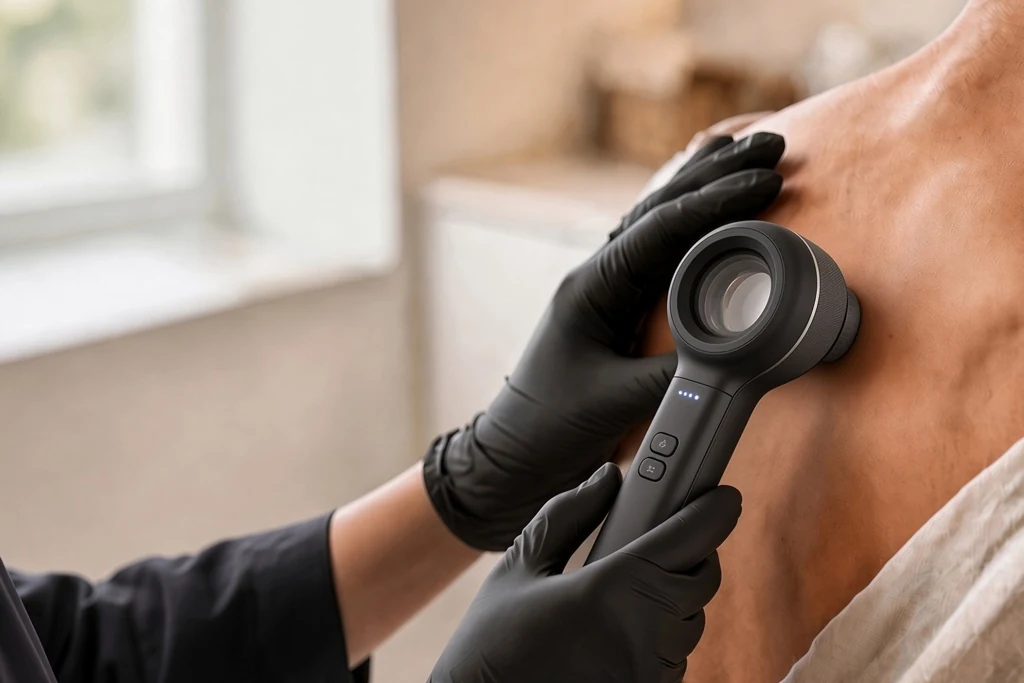
At Dermique we use Clarity II by Cynosure Lutronic. It combines two lasers in one device:
- an alexandrite laser, especially effective on fair skin with dark hair;
- an Nd:YAG laser, suitable for a wider range of skin types, including darker skin.
Built-in cryogen cooling reduces discomfort. Most patients describe the sensation as a mild, well-tolerated warm sting. Settings are tailored to the skin, the area and the hair type.
Which areas can be treated
Clarity II laser hair removal can be done on the face, underarms, bikini and intimate area, arms, legs, back and shoulders, chest and abdomen, buttocks, and the neck and beard line in men. If you are planning several areas, they can usually be combined in one visit. At the consultation we will help you choose the order and intervals so the course is as convenient as possible.
How to prepare for your first session
- Shave the area the evening before or up to 24 hours before the treatment.
- No waxing, epilating or plucking for at least 4 weeks before.
- No active tan, self-tanner or sunbeds. If you have just come back from a sunny holiday, tell us.
- Clean, dry skin, with no creams, oils, deodorant or make-up on the area.
- Tell us about any medication you take. Some medicines increase sensitivity to light.
What results to expect
Laser hair removal results are gradual. After each session, treated hairs fall out over a few days to a few weeks, and new hair usually grows back sparser, finer and lighter. As the course goes on, your skin stays smooth for longer.
How much the hair reduces varies from person to person. It depends on hair colour and thickness, skin type, the area and hormonal factors. Light blonde, grey and white hairs contain little pigment and respond poorly to laser. That is why we will give you a realistic assessment at the consultation. Some people need maintenance sessions over time.
When laser hair removal is not suitable
Treatment is not recommended during pregnancy, while taking photosensitising medication, with active infection or inflammation in the area, or on tanned or sunburnt skin. With hormonal disorders, hair may come back more often. In that case a dermatology consultation about the cause is useful too.
What if you also have pigmentation?
Autumn is also a good season for other treatments where the sun is the enemy. These include Lumecca IPL photorejuvenation, pigmentation treatment and chemical peels. If you are planning several treatments, we will help you schedule them over time.
Frequently asked questions
How many sessions do I need?
We usually recommend 6–8 sessions. The exact number depends on the area, hair colour and density, skin type and hormonal factors.
Does laser hair removal hurt?
Clarity II has built-in cryogen cooling. Most patients describe a mild, well-tolerated warm sting.
Can I have it in summer?
Yes, but only with careful skin assessment and strict sun protection. It is not done on actively tanned skin.
Is it suitable for darker skin?
Yes. The Nd:YAG laser in Clarity II allows treatment of darker skin types.
Can I shave between sessions?
Yes, shaving is fine. Avoid waxing, epilators and plucking for at least 4 weeks before a session.
Book a consultation at Dermique
If you recognise yourself in this article, the best first step is an examination by a dermatologist. Fill in our enquiry form and our team will contact you to confirm a convenient time. You can also reach us via our Contact page. Current prices are on our price list.
This article is for information only and does not replace a medical examination. The choice of treatment and expected results are individual and are decided after a consultation.