Do you wake up with a tight jaw, a headache at the temples or a tired feeling in your face? Has your dentist told you your teeth are worn, or does your partner hear you grinding at night? These are typical signs of bruxism. On US and UK social media, botulinum toxin in the chewing muscles has become popular as “masseter Botox” or “jawtox”, mostly for its effect on face shape. Behind the trend, though, there is a real medical benefit worth a serious conversation.
What is bruxism?
Bruxism is involuntary clenching or grinding of the teeth. It can happen during the day, often during concentration or stress, or at night during sleep, when people usually don’t notice it. The main driver is the masseter, the powerful chewing muscle at the angle of the jaw. Sometimes the temporalis muscle at the temple is involved too.
Possible signs:
- jaw pain or stiffness, especially in the morning;
- headaches at the temples;
- worn, chipped or sensitive teeth;
- clicking or discomfort in the jaw joint;
- visibly enlarged masseters that give the lower face a squarer shape.
How botulinum toxin helps
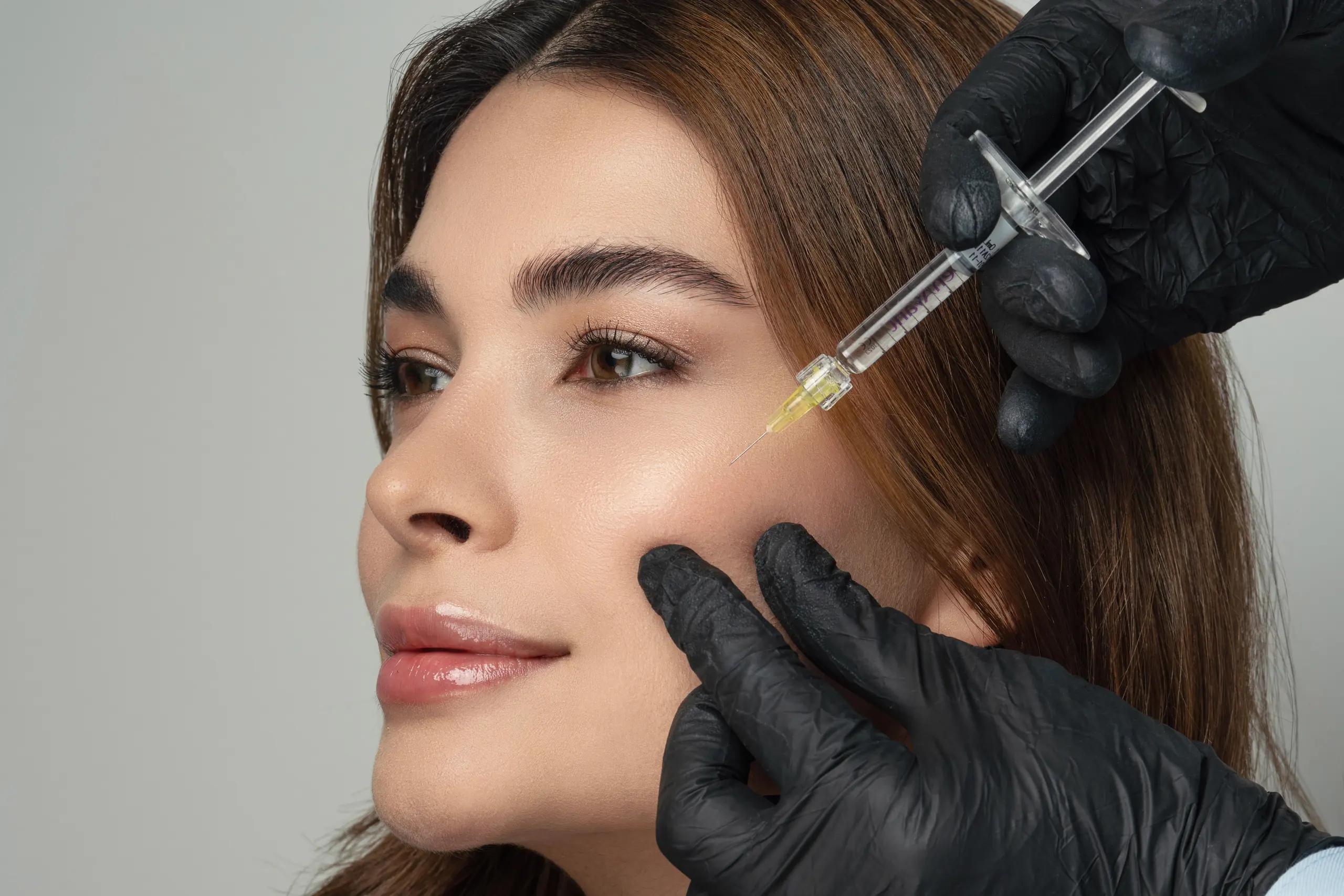
Small, precisely dosed amounts of botulinum toxin are injected into the masseters and, when needed, the temporalis. The toxin temporarily reduces the strength of the muscle’s contraction. The muscle relaxes, pressure on the teeth and joint decreases, and clenching becomes weaker.
Normal chewing and speaking are preserved. The aim is not to “switch off” the muscle but to control its overactivity. Other muscles also work in the jaw, and the dose is chosen so that function remains.
When you feel the effect and how long it lasts
- The first changes are usually felt within a few days.
- The maximum effect develops over about two weeks.
- The effect usually lasts several months. How long depends on muscle strength, dose, metabolism and your habits.
When the tension gradually starts to return, that is a sign it is time to assess the next treatment.
The aesthetic effect: a softer jawline
In people with prominent masseters “trained” by clenching, botulinum toxin can gradually soften a wide, square lower face. This effect is not instant. It develops over the following weeks, because the muscle becomes less active and, over time, smaller. That is why the treatment is also popular as non-surgical “jaw slimming”.
Not every wide face is caused by the masseter, though. Width can come from bone structure, fat or skin laxity. Before treatment, the doctor examines the muscle at rest and while clenching to judge whether the treatment is right for you.
Who the treatment may suit
Botulinum toxin in the masseters may be suitable if:
- you clench or grind your teeth and have jaw pain, stiffness or fatigue;
- you get headaches at the temples linked to clenching;
- your dentist has found tooth wear and you are looking for something alongside your splint;
- you have visibly enlarged masseters and want a softer lower-face contour.
If the jaw pain is severe or sudden, or you can’t open your mouth fully, you first need an assessment by a dentist or another specialist to rule out other causes.
What the treatment at Dermique involves
- Consultation. We discuss your symptoms, habits (daytime or night-time clenching, stress, caffeine) and previous treatments, including whether you wear a splint.
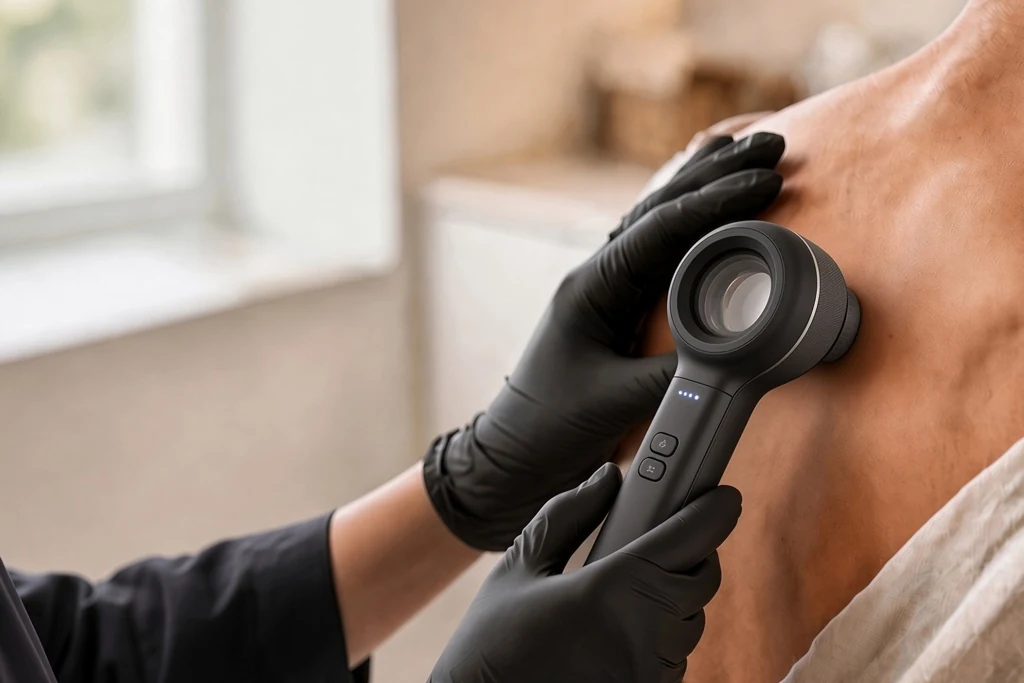
- Muscle examination. We palpate and assess the masseters relaxed and clenched, and check symmetry.
- Treatment. The injections take a few minutes and use a very fine needle.
- Review. After about two weeks we assess the effect and adjust the plan if needed.
Botulinum toxin does not replace dental care. If you have tooth wear or a joint problem, it is best to combine treatment with a dental consultation. We sometimes work alongside your dentist, for example when a protective splint is also used. Read more about bruxism treatment at Dermique.
Possible side effects
Mild redness, tenderness or a bruise at the injection point are possible. Some patients notice their jaw tires more quickly when chewing very hard food for a while. Rarely, with incorrect placement, a neighbouring muscle can be affected and the smile can look temporarily asymmetric. That is why the treatment should be done by a doctor who knows facial anatomy well.
The treatment is not done during pregnancy or breastfeeding, with an active infection in the area, with certain neuromuscular conditions, or with a known allergy to the product. Tell your doctor about all medications you take.
What you can do yourself
- Notice whether you clench during the day, at the computer or in the car. Consciously relaxing the jaw helps.
- Limit caffeine and alcohol in the evening.
- Stress management and good sleep habits also matter.
- Don’t skip your protective splint if your dentist recommended one.
Frequently asked questions
Will I be able to chew normally?
Yes. Normal chewing and speaking are preserved. Some patients notice their jaw tires more quickly with very hard food for a while.
When will I feel the effect?
The first changes are usually felt within a few days, and the maximum effect develops over about two weeks.
How long does it last?
Usually several months. It depends on muscle strength, dose, metabolism and your habits.
Will my face look slimmer?
With prominent masseters, the jawline can gradually soften over weeks. Not every wide face is caused by the muscle, so an examination comes first.
Does Botox replace my dental splint?
No. Botulinum toxin does not replace dental care. If you have tooth wear or a joint problem, it is best combined with a dental consultation.
Book a consultation at Dermique
If you recognise yourself in this article, the best first step is an examination by a dermatologist. Fill in our enquiry form and our team will contact you to confirm a convenient time. You can also reach us via our Contact page. Current prices are on our price list.
This article is for information only and does not replace a medical examination. The choice of treatment and expected results are individual and are decided after a consultation.