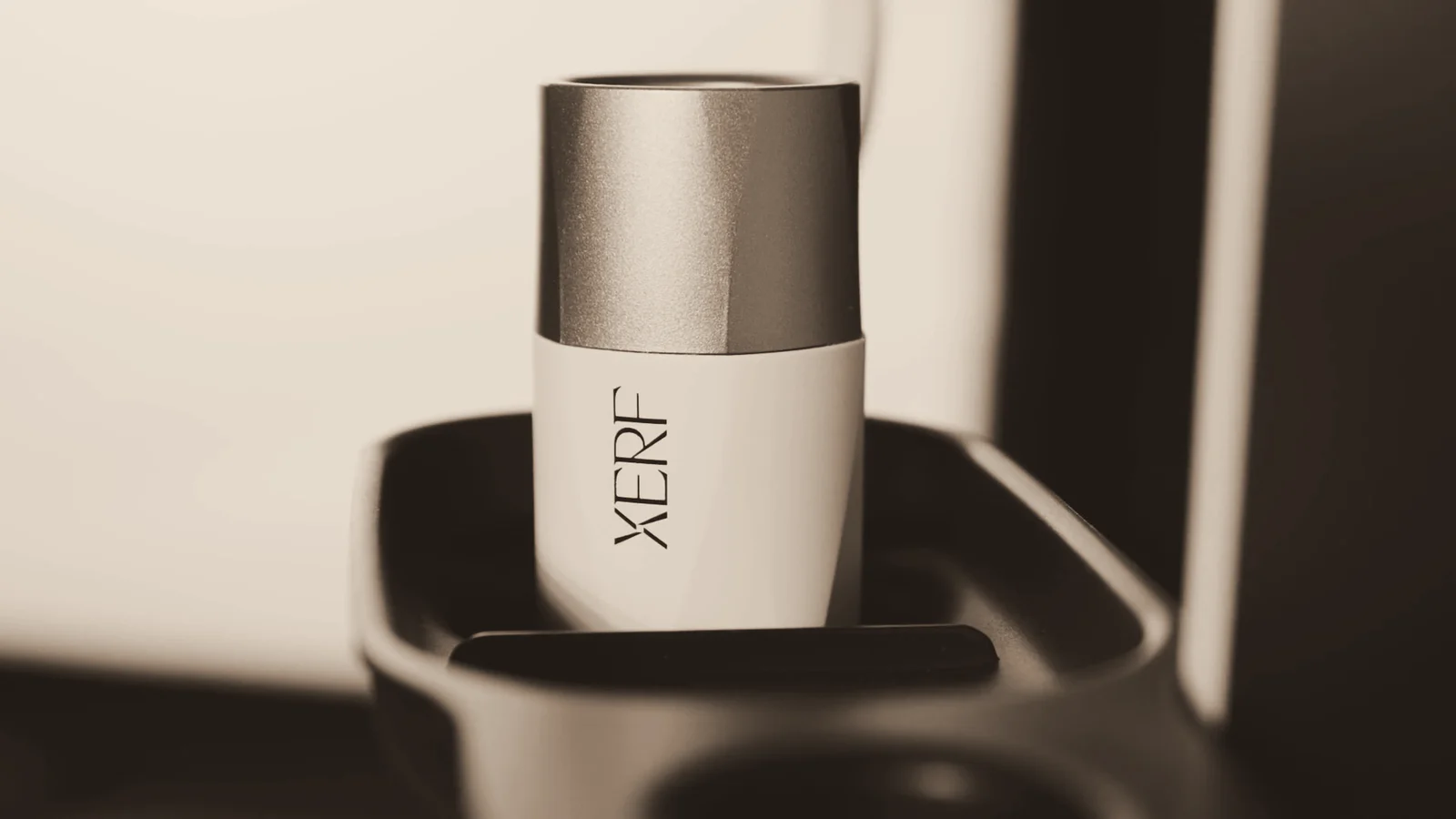
If you have followed US beauty news over the past few months, you have almost certainly seen the name XERF. The new radiofrequency device from Cynosure Lutronic has become one of the most talked-about aesthetic treatments of the year. Kim Kardashian called it her “new fave tightening laser”, Priyanka Chopra Jonas filmed her session, and leading beauty titles have tested it and given it awards. On 26 October 2026 we announced XERF at Dermique. Here is what the technology is, why everyone is talking about it and what you can realistically expect.
XERF is a non-invasive monopolar radiofrequency (RF) device for skin tightening, developed by Cynosure Lutronic. According to Allure, it debuted in South Korea in 2024 and was FDA-cleared for use in the US in August 2025. The treatment involves no needles, no numbing and no downtime.
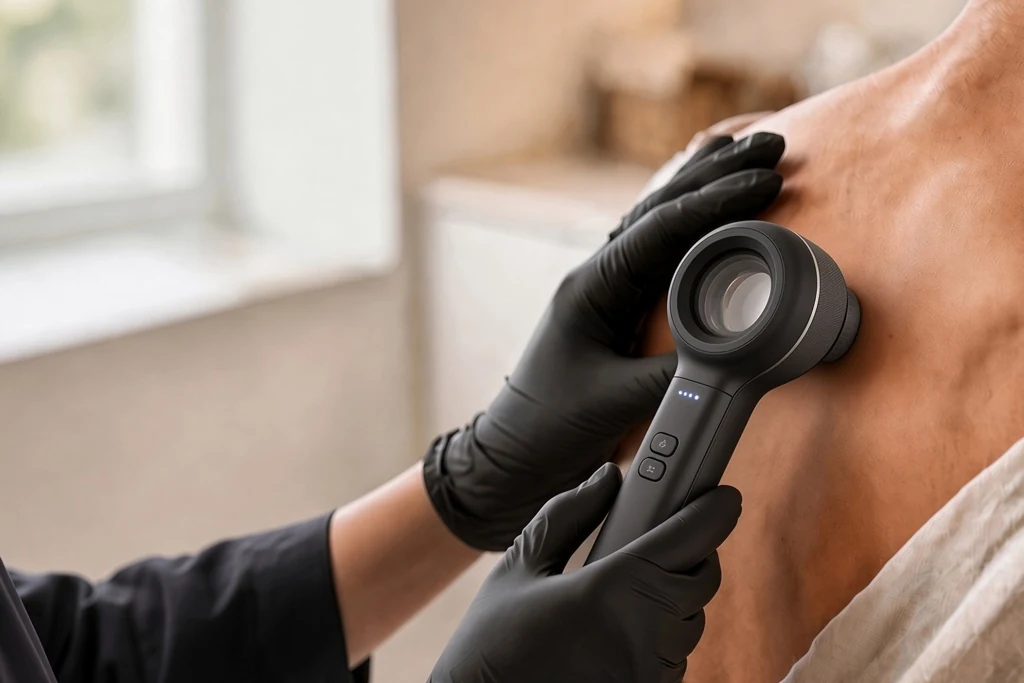
Unlike lasers, XERF does not use light. It delivers radiofrequency energy that heats the skin and deeper tissue. This makes collagen fibres contract and stimulates new collagen over the following months. You can read more about the treatment at our clinic on our XERF at Dermique page.
In February 2026, Kim Kardashian shared her XERF treatment on Instagram Stories. She called it her “new fave tightening laser” and said it “doesn’t even hurt”. Technically, XERF is a radiofrequency device rather than a laser, but her post quickly made the name known worldwide. It was covered by NewBeauty and India Today.
In May 2026, before the Gold Gala, Priyanka Chopra Jonas shared a video of her XERF session at a clinic in San Diego. According to NewBeauty and The Indian Express, the video sparked huge interest in the treatment.

XERF is not just a social media trend. Editors at leading titles have tried it themselves, and dermatologists have commented on the results:
To be fair, part of the buzz is down to marketing. The Cut notes that some US dermatologists link XERF’s popularity to its large advertising campaign and warn against expecting facelift-like results. That is why below you will find what the research says and who the treatment suits.
XERF is the first monopolar RF system to combine two frequencies: 6.78 MHz and 2 MHz. In monopolar devices, energy travels from the handpiece into the deeper layers of the skin and exits through a grounding pad placed elsewhere on the body. This allows heat to reach deeper than with bipolar devices.
According to the dermatologists quoted by TODAY, the 6.78 MHz frequency works more superficially, while 2 MHz reaches the SMAS. This is the layer of connective tissue beneath the skin and fat that surgeons work on in some facelifts. According to Cynosure Lutronic, the treatment can be set to three depths. Integrated cryogen cooling and temperature sensors protect the skin surface throughout.
XERF is a new technology, and the evidence is still building. So far there are two publications in the journal Lasers in Medical Science:
In other words, the first data are encouraging, but the studies are small. That is why at Dermique we recommend XERF after an examination and with realistic expectations.
The dermatologists quoted by The Cut and The Indian Express agree: XERF works best for mild to moderate skin laxity. It may suit you if you have:
XERF does not replace a surgical facelift. With more marked laxity, another method or a combination of treatments may be more suitable. According to Allure and Harper’s Bazaar, the treatment suits all skin types and tones. Whether it is right for you is something we decide after an examination.
XERF is arriving at Dermique very soon. Regular prices are 1500€ for the face and 1900€ for the face and neck. You can pre-book at a discount:
Limited spots available. Payment is at the clinic only. The offer cannot be combined with other discounts or promotions. As soon as the device arrives, we will call you first to book your appointment. You will find more details in the XERF pre-booking section.
The treatment is done without numbing cream. Most patients feel warmth, and the heat is more noticeable where the tissue is thinner, such as below the jawline. Sensitivity varies, and the intensity is adjusted during the treatment.
Collagen fibres contract straight after the treatment. New collagen builds gradually, however, so the skin becomes firmer and denser over the following months.
It depends on your skin and the area treated. We decide this after an examination and consultation. Pre-booking at Dermique offers packages of 1 or 2 sessions.
No. XERF works best for mild to moderate skin laxity. With more marked laxity, another method or a combination of treatments may be more suitable, which we discuss at your consultation.
Regular prices are 1500€ for the face and 1900€ for the face and neck. You can pre-book at a discount of up to −20%. Limited spots available. Payment is at the clinic only.
If you recognise yourself in this article, the best first step is an examination by a dermatologist. Fill in our enquiry form and our team will contact you to confirm a convenient time. You can also reach us via our Contact page. Current prices are on our price list.
This article is for information only and does not replace a medical examination. The choice of treatment and expected results are individual and are decided after a consultation.





Limited spots available
up to −20% off
Be among the first to experience XERF at Dermique. Secure exclusive pre-launch pricing and save up to €760.
Explore the offer