XERF is coming to Dermique! Get early access with exclusive savings of up to 20%. Limited spots available. See the offer →

Scar treatment

Scars can develop after acne, surgery, injury, burns, inflammation, or stretching of the skin. They may appear depressed, raised, red, or pigmented and can affect the skin’s texture and overall appearance.

At Dermique, we take an individualized approach to scar treatment because different types of scars require different treatment strategies. We evaluate the type of scar, how long it has been present, its depth, color, location, and the skin’s tendency toward abnormal healing. Based on this assessment, we create a personalized treatment plan that may include fractional CO₂ laser resurfacing, RF microneedling, vascular laser treatments, IPL, injectable treatments, or a combination of modalities.
See more…

Types of scars we treat

Surgical and traumatic scars

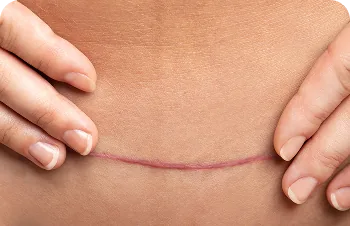
Scars from surgery or injury may be red, raised, widened, firm, or uneven. The earlier a scar is properly evaluated, the more effectively we can manage the healing process.

Surgical and traumatic scars

Wound and surgical scars – scar on the lower abdomen

Scars from surgery or injury may be red, raised, widened, firm, or uneven. The earlier a scar is properly evaluated, the more effectively we can manage the healing process.

For newer scars, treatment often focuses on reducing redness and preventing abnormal scar formation. For older scars, the focus shifts toward improving texture, firmness, and overall appearance. Depending on the individual scar, treatment may include:

Stretch marks

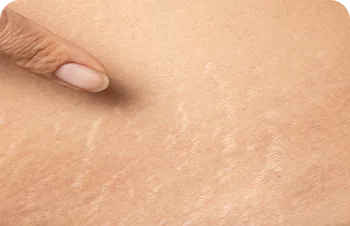
Stretch marks are a type of scar caused by rapid stretching of the skin. They most commonly appear on the abdomen, thighs, buttocks, breasts, or arms. Newer stretch marks are typically pink or red, while older stretch marks become lighter in color and may appear more depressed.

Stretch marks

Stretch marks – close-up of skin with stretch marks

Stretch marks are a type of scar caused by rapid stretching of the skin. They most commonly appear on the abdomen, thighs, buttocks, breasts, or arms. Newer stretch marks are typically pink or red, while older stretch marks become lighter in color and may appear more depressed.

Treatment is tailored to the age and appearance of the stretch marks and may include:

Hypertrophic and keloid scars

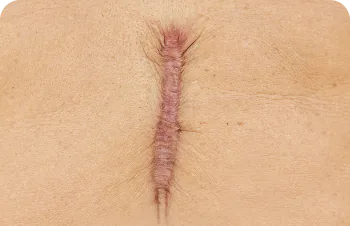
Hypertrophic and keloid scars are raised, firm scars that may be red, itchy, painful, or cause a sensation of tightness. Hypertrophic scars typically remain within the boundaries of the original wound, while keloids can extend beyond them and have a greater tendency to recur.

Hypertrophic and keloid scars

Hypertrophic and keloid scars – raised scar on the skin

Hypertrophic and keloid scars are raised, firm scars that may be red, itchy, painful, or cause a sensation of tightness. Hypertrophic scars typically remain within the boundaries of the original wound, while keloids can extend beyond them and have a greater tendency to recur.

Aggressive treatment is not always the best approach, which is why we typically use a combination of treatments that may include:

Atrophic scars

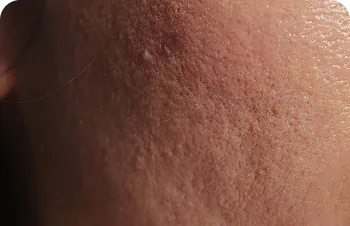
Atrophic scars are depressed scars that most commonly develop after acne or other inflammatory skin conditions. They result from collagen loss and uneven healing within the skin.

Atrophic scars

Atrophic scars – close-up of skin with depressed scars

Atrophic scars are depressed scars that most commonly develop after acne or other inflammatory skin conditions. They result from collagen loss and uneven healing within the skin.

At Dermique, we treat atrophic scars with:

The goal is to stimulate collagen remodeling and progressively improve the texture and appearance of the skin.

Acne scars

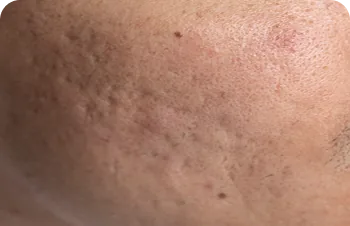
Acne scarring often involves a combination of uneven texture, depressed scars, enlarged pores, persistent redness, or post-inflammatory hyperpigmentation. Effective treatment starts with identifying exactly what we are seeing — true acne scarring, residual redness, pigmentation, or a combination of several concerns.

Acne scars

Acne scars – close-up of a cheek with scarring

Acne scarring often involves a combination of uneven texture, depressed scars, enlarged pores, persistent redness, or post-inflammatory hyperpigmentation. Effective treatment starts with identifying exactly what we are seeing — true acne scarring, residual redness, pigmentation, or a combination of several concerns.

At Dermique, we do not rely on a single technology to treat acne scars. Depending on the individual case, we may combine:

Types of scars we treat
Start with a comprehensive skin evaluation and a personalized treatment plan from Dermique’s medical team.
Frequently asked questions
Can laser treatment completely remove a scar?
Complete scar removal depends on the type, depth, and age of the scar. Superficial scars can respond extremely well to treatment. Deeper or older scars can be significantly improved, although complete removal is not always possible.
A series of 3–5 treatments spaced 6–8 weeks apart is typically recommended. Results continue to develop gradually over 3–6 months following each treatment as the skin remodels.
The earlier a scar is evaluated, the more effectively the healing process can be managed. This does not mean that every new scar should immediately be treated with a laser. Newer scars may initially benefit from a more conservative approach, while more intensive treatments can be introduced based on the condition of the skin and the maturity of the scar.
Treatment is performed with local anesthesia and is generally well tolerated. Downtime varies depending on the treatment method used and the size of the area being treated.

Atrophic scars

Atrophic scars are indented scars that most commonly appear following acne or other inflammatory conditions. They are caused by a loss of collagen and uneven skin regeneration.

Appropriate treatment methods

At Dermique, we don’t treat acne scars using just one technique. Where necessary, we combine: