Hair loss can be temporary or chronic and may be related to hormonal or genetic factors, autoimmune conditions, nutritional deficiencies, stress, medications, or scalp disorders. That is why effective treatment starts with an accurate diagnosis rather than a one-size-fits-all solution.
Our dermatologists evaluate the type and pattern of hair loss, the condition of the scalp, how long the problem has been present, family history, hormonal and metabolic factors, previous treatments, and whether additional testing may be needed.
The goal is to identify the underlying cause and create a realistic treatment plan focused on stabilizing hair loss, promoting growth, and providing long-term follow-up.

See more…
Hair loss treatment is highly individualized and based on the diagnosis. There is no single treatment that works equally well for every type of hair loss. Regular follow-up allows us to adjust the treatment plan when needed and achieve optimal long-term results.
Depending on the underlying cause, your treatment plan may include:
Diffuse hair loss
Telogen effluvium is a form of diffuse hair loss in which a large number of hairs prematurely enter the shedding phase of the hair growth cycle. It often develops after significant stress, surgery, infection, childbirth, rapid weight loss, nutritional deficiencies, or the use of certain medications.
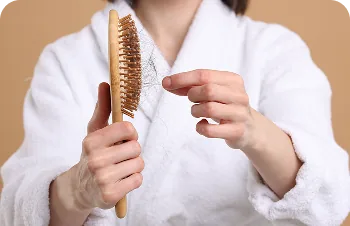
Patients typically notice increased hair shedding while washing or brushing their hair or may find more hair than usual on their pillow.
Androgenetic alopecia
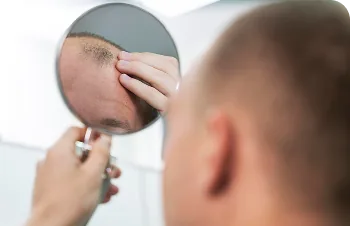
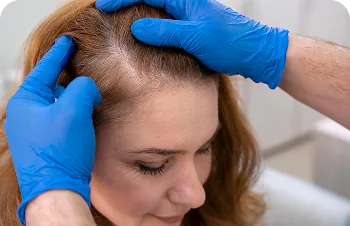
Androgenetic alopecia is the most common form of chronic hair loss in both men and women. In men, it typically presents as a receding hairline and thinning at the crown. In women, it more commonly causes gradual thinning through the central part of the scalp.
Early diagnosis is important because treatment is most effective while the hair follicles are still active. The goal is to slow progression, stabilize hair loss, and preserve as much hair density as possible.
Alopecia areata
Alopecia areata is an autoimmune form of hair loss that causes clearly defined patches of hair loss. It can affect the scalp, beard, eyebrows, or other hair-bearing areas of the body.
Treatment depends on the extent, duration, and activity of the condition. Our team evaluates the degree of hair loss and selects a treatment approach focused on controlling inflammation and promoting hair regrowth.
Diffuse hair loss
Telogen effluvium is a form of diffuse hair loss in which a large number of hairs prematurely enter the shedding phase of the hair growth cycle. It often develops after significant stress, surgery, infection, childbirth, rapid weight loss, nutritional deficiencies, or the use of certain medications.
Patients typically notice increased hair shedding while washing or brushing their hair or may find more hair than usual on their pillow.
Androgenetic alopecia
Androgenetic alopecia is the most common form of chronic hair loss in both men and women. In men, it typically presents as a receding hairline and thinning at the crown. In women, it more commonly causes gradual thinning through the central part of the scalp.
Early diagnosis is important because treatment is most effective while the hair follicles are still active. The goal is to slow progression, stabilize hair loss, and preserve as much hair density as possible.
Alopecia areata
Alopecia areata is an autoimmune form of hair loss that causes clearly defined patches of hair loss. It can affect the scalp, beard, eyebrows, or other hair-bearing areas of the body.
Treatment depends on the extent, duration, and activity of the condition. Our team evaluates the degree of hair loss and selects a treatment approach focused on controlling inflammation and promoting hair regrowth.
Hair loss can sometimes be associated with scalp conditions such as seborrheic dermatitis, psoriasis, folliculitis, inflammation, itching, excess oil, or flaking. In these cases, treatments aimed solely at stimulating hair growth are not enough. The first step is to bring the underlying scalp condition under control, as a healthy environment around the hair follicle is essential for consistent hair growth.
We use cookies and similar technologies to keep the website working properly and to give you a better experience. You can accept all, decline the optional ones or manage your preferences.
Atrophic scars
Atrophic scars are indented scars that most commonly appear following acne or other inflammatory conditions. They are caused by a loss of collagen and uneven skin regeneration.
Appropriate treatment methods
At Dermique, we don’t treat acne scars using just one technique. Where necessary, we combine:

Limited spots available
up to −20% off
Be among the first to experience XERF at Dermique. Secure exclusive pre-launch pricing and save up to €760.
Explore the offer →