XERF is coming to Dermique! Get early access with exclusive savings of up to 20%. Limited spots available. See the offer →

Atopic dermatitis

Atopic dermatitis is a chronic inflammatory skin condition that affects the skin barrier, leaving the skin more prone to dryness, sensitivity, redness, itching, flaking, and recurring flare-ups.

At Dermique, our approach goes beyond treating active inflammation. We focus on creating a long-term management plan tailored to each patient’s age, severity of symptoms, affected areas, frequency of flare-ups, and everyday factors that may be contributing to the condition.

See more…

Atopic dermatitis at different ages

Atopic dermatitis in children

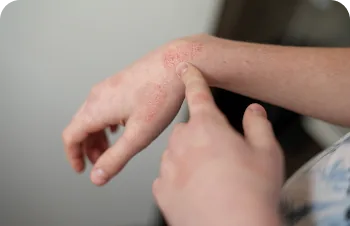
In children, atopic dermatitis commonly affects the creases of the elbows and knees, wrists, neck, or face. Persistent itching can interfere with sleep, concentration, and a child’s overall comfort and quality of life.

Atopic dermatitis in children

Atopic dermatitis in children – child's arm with red, irritated skin

In children, atopic dermatitis commonly affects the creases of the elbows and knees, wrists, neck, or face. Persistent itching can interfere with sleep, concentration, and a child’s overall comfort and quality of life.

Atopic dermatitis in babies

In babies, atopic dermatitis often appears as dry, red, irritated skin on the cheeks, body, or skin folds. Because infant skin is especially sensitive, treatment needs to be carefully selected, gentle, and easy for parents to incorporate into daily care.

Atopic dermatitis in babies

Atopic dermatitis in babies – baby with red patches on the back

In babies, atopic dermatitis often appears as dry, red, irritated skin on the cheeks, body, or skin folds. Because infant skin is especially sensitive, treatment needs to be carefully selected, gentle, and easy for parents to incorporate into daily care.

Atopic dermatitis in adults

In adults, atopic dermatitis can be more persistent and may affect the hands, face, eyelids, neck, or larger areas of the body. Flare-ups are often triggered or worsened by stress, workplace irritants, frequent washing, unsuitable skincare products, or a compromised skin barrier.

Atopic dermatitis in adults

Atopic dermatitis in adults – hands and leg with red patches

In adults, atopic dermatitis can be more persistent and may affect the hands, face, eyelids, neck, or larger areas of the body. Flare-ups are often triggered or worsened by stress, workplace irritants, frequent washing, unsuitable skincare products, or a compromised skin barrier.

Atopic dermatitis at different ages
Atopic dermatitis treatment at Dermique

Treatment begins with a thorough skin evaluation. We assess which areas are affected, how often flare-ups occur, what skincare products are currently being used, and which factors may be contributing to or worsening the condition.

Treatment may include:

  • topical anti-inflammatory medications
  • therapies to restore and strengthen the skin barrier
  • appropriate cleansers and emollients
  • a maintenance plan once the active flare-up is under control
  • additional diagnostic testing or systemic treatment for more severe or persistent cases
Our goal is to give every patient a clear, practical plan — what to use during a flare-up, how to care for the skin between flares, and when follow-up care is needed.
Start with a comprehensive skin evaluation and a personalized treatment plan from Dermique’s medical team.
Frequently asked questions
Can atopic dermatitis go away over time?
For some children, symptoms improve with age, while for others, the condition may continue into adulthood. Even when atopic dermatitis does not completely resolve, it can be effectively managed with the right treatment and consistent maintenance care.
Common triggers include dry air, cold weather, sweating, stress, harsh cleansers, frequent washing, wool or rough fabrics, unsuitable skincare products, and exposure to irritants. Allergies may also play a role for some patients, but this needs to be evaluated on an individual basis.
Yes, when treatment is properly prescribed and used as directed. For babies and young children, treatment is selected based on age, the areas affected, and the severity of inflammation. Parents should avoid switching creams or medications without medical guidance, as this can often prolong or worsen the condition.
Not necessarily. Atopic dermatitis does not automatically mean that a patient has a food allergy. Testing may be recommended when there is a specific reason — for example, a clear connection between symptoms and certain foods, severe flare-ups, other signs of allergy, or poor disease control despite appropriate treatment.
No, when they are used correctly and for the appropriate length of time. Problems are more likely to occur when topical corticosteroids are used incorrectly — for too long, too frequently, or when the strength of the medication is not appropriate for the treatment area. At Dermique, we provide clear instructions on where, when, and for how long each treatment should be used.

Atrophic scars

Atrophic scars are indented scars that most commonly appear following acne or other inflammatory conditions. They are caused by a loss of collagen and uneven skin regeneration.

Appropriate treatment methods

At Dermique, we don’t treat acne scars using just one technique. Where necessary, we combine: